3D printing technology has revolutionized the manufacturing and design industries, offering unparalleled flexibility in creating complex geometries. Among the various materials used in 3D printing, wax material holds a special place, particularly in industries like jewelry making, dentistry, and investment casting. As a supplier of 3D printing wax material, understanding the support structure requirements is crucial for both our customers and the success of their projects. 3D Printing Wax Material
Understanding 3D Printing Wax Material
Before delving into the support structure requirements, it’s essential to understand the nature of 3D printing wax material. Wax is a popular choice for 3D printing due to its low melting point, which makes it ideal for investment casting. In investment casting, a wax pattern is created using 3D printing, then coated with a ceramic shell. Once the shell hardens, the wax is melted out, leaving a cavity that can be filled with molten metal.
Wax materials used in 3D printing come in different formulations, each with its unique properties such as melt viscosity, strength, and surface finish. These properties can influence the support structure requirements. For instance, a wax material with higher viscosity may require less extensive support structures as it is more likely to hold its shape during the printing process.
Why Support Structures are Necessary in Wax 3D Printing
Support structures play a vital role in 3D printing, especially when using wax material. The primary reasons for using support structures in wax 3D printing are:
Overhang Support
In 3D printing, overhangs are areas of a model that extend horizontally without any direct vertical support below them. When printing with wax, if there are no support structures for overhangs, the molten wax may sag or droop under gravity before it solidifies. This can result in a distorted or incomplete print, ruining the final product. For example, in jewelry designs with intricate filigree work or pendant designs with long, horizontal strands, support structures are necessary to ensure the overhanging parts are printed accurately.
Bridge Support
Bridges are horizontal sections of a model that span a gap between two vertical structures. Similar to overhangs, bridges require support to prevent them from collapsing during the printing process. Without proper support, the wax may not be able to span the gap effectively, leading to a broken or uneven bridge in the final print.
Stability During Printing
Support structures also enhance the overall stability of the print. When a model has a complex shape or a narrow base, it may be prone to tipping over during the printing process. Support structures can provide additional stability by anchoring the model to the build plate and preventing it from shifting or moving during printing.
Types of Support Structures for Wax 3D Printing
There are several types of support structures that can be used in wax 3D printing, each with its own advantages and disadvantages.
Linear Supports
Linear supports are the simplest type of support structures. They consist of straight lines or columns that connect the overhanging parts of the model to the build plate or other supported areas of the model. Linear supports are easy to generate and remove, but they may leave behind small marks on the surface of the printed model. These supports are suitable for models with relatively simple overhangs or when a quick and easy support solution is needed.
Tree Supports
Tree supports are more complex than linear supports. They are designed to mimic the branching structure of a tree, with a single stem that branches out to support multiple overhanging parts of the model. Tree supports are more efficient in terms of material usage as they require less wax compared to linear supports while still providing adequate support. They also leave fewer marks on the printed model, making them a popular choice for high – quality prints. However, tree supports can be more difficult to generate and remove, especially for models with very complex geometries.
Grid Supports
Grid supports consist of a grid – like structure that is placed under the overhanging parts of the model. Grid supports provide uniform support over a large area, making them suitable for models with large, flat overhangs. They are relatively easy to generate and can be adjusted in terms of grid density to provide the appropriate level of support. However, grid supports may use more wax material compared to tree supports and can be more difficult to remove from the printed model.
Factors Affecting Support Structure Requirements
Model Geometry
The geometry of the model is one of the most significant factors affecting the support structure requirements. Models with complex geometries, such as those with multiple overhangs, deep undercuts, or large bridges, will require more extensive support structures compared to simple models. For example, a jewelry design with a lot of intricate details and overhanging elements will need a well – designed support structure to ensure accurate printing.
Printing Orientation
The orientation of the model during printing can also have a significant impact on the support structure requirements. By changing the orientation of the model, it is sometimes possible to reduce the amount of support material needed. For instance, if a model has a large overhang, printing it at an angle rather than horizontally may reduce the need for extensive support structures. However, changing the printing orientation may also affect the surface finish and the overall quality of the print, so a balance needs to be struck between reducing support material and maintaining print quality.
Wax Material Properties
As mentioned earlier, the properties of the wax material used in 3D printing can influence the support structure requirements. Wax materials with higher strength and lower melt viscosity are more likely to hold their shape during printing, requiring less support. On the other hand, wax materials with lower strength and higher melt viscosity may need more extensive support structures to prevent sagging or drooping.
Designing Effective Support Structures for Wax 3D Printing
When designing support structures for wax 3D printing, the following guidelines can be followed:
Minimize Support Material
The use of support material should be minimized as much as possible to reduce material waste and post – processing time. This can be achieved by carefully considering the model geometry and printing orientation. For example, using tree supports instead of linear supports can significantly reduce the amount of support material needed.
Ensure Easy Removal
Support structures should be designed in such a way that they can be easily removed from the printed model. This can be achieved by using support structures with thin connections to the model and by avoiding support structures that are too complex or difficult to access. For instance, if a support structure is attached to a delicate part of the model, it should be designed in a way that it can be removed without damaging the model.
Provide Adequate Support
Despite minimizing support material, it is essential to ensure that the support structures provide adequate support to the model during printing. This may require adjusting the density, thickness, and placement of the support structures based on the model geometry and the properties of the wax material.
Post – Processing of Support Structures
Once the 3D printing of the wax model is complete, the support structures need to be removed. The post – processing of support structures in wax 3D printing is relatively straightforward compared to other 3D printing materials. Since wax has a low melting point, the support structures can be easily removed by using heat. For example, the printed model can be placed in a warm water bath or a low – temperature oven, and the support structures will melt away, leaving the clean model behind.
However, it is important to note that the post – processing temperature should be carefully controlled to avoid damaging the printed model. Different wax materials have different melting points, so the appropriate temperature for post – processing should be determined based on the specific wax material used.
Conclusion
As a supplier of 3D printing wax material, we understand the importance of providing our customers with the knowledge and guidance on support structure requirements. Properly designed support structures are essential for achieving high – quality prints in wax 3D printing. By understanding the factors that affect support structure requirements, choosing the appropriate type of support structures, and following the guidelines for designing and post – processing support structures, our customers can ensure the success of their 3D printing projects.
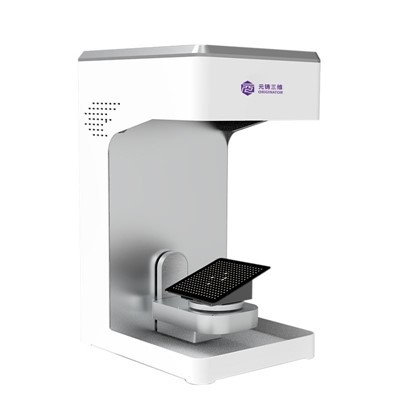
Jewelry 3D Scanner If you are interested in purchasing our 3D printing wax material and need assistance with support structure design for your projects, please feel free to contact us for a discussion. We are committed to providing you with the best products and services to meet your 3D printing needs.
References
- Gibson, I., Rosen, D. W., & Stucker, B. (2015). Additive Manufacturing Technologies: 3D Printing, Rapid Prototyping, and Direct Digital Manufacturing. Springer.
- Wohlers, T. (2019). Wohlers Report 2019: 3D Printing and Additive Manufacturing State of the Industry. Wohlers Associates.
- ASTM F2792 – 12a. (2012). Standard Terminology for Additive Manufacturing Technologies. ASTM International.
Hangzhou Originator 3D Technology Co., Ltd.
Hangzhou Originator 3D Technology Co., Ltd. is one of the most experienced 3d printing wax material manufacturers and suppliers in China. With abundant experience, we warmly welcome you to wholesale high quality 3d printing wax material made in China here from our factory. Contact us for more details.
Address: Room 403, Building 2, Block B, Heda Incubation Park,No. 452, 6th Avenue, Xiasha, Qiantang District,Hangzhou, Zhejiang, China
E-mail: Sales@originator3d.com
WebSite: https://www.originator3d.com/
