As a supplier of DC motor controllers, I often get asked about various technical aspects of our products. One crucial feature that stands out in ensuring the safety and longevity of DC motors is overload protection. In this blog, I aim to delve into what the overload protection of a DC motor controller is, why it’s so important, and how it functions in real – world applications. DC Motor Controller

Understanding Overload in DC Motors
Before we can understand overload protection, we need to know what an overload condition is in the context of a DC motor. A DC motor operates on the principle of converting electrical energy into mechanical energy. When a motor is subject to an overload, it means that it is being forced to work beyond its normal rated capacity.
This can occur for several reasons. For instance, in industrial applications, the mechanical load on the motor may suddenly increase. If a conveyor belt gets jammed, the motor driving it will face an instant rise in the load. In automotive applications, a DC motor in the power – steering system might experience an overload if the steering mechanism seizes up.
In electrical terms, when an overload occurs, the current flowing through the motor increases significantly. According to Ohm’s law (I = V/R), if the resistance of the motor’s windings remains relatively constant, an increase in the mechanical load effectively tries to slow down the motor. As the back – emf (electromotive force) generated by the rotating motor decreases, the net voltage across the motor’s windings increases, leading to a sharp rise in current.
What is Overload Protection?
Overload protection in a DC motor controller is a safety mechanism designed to detect when a motor is drawing excessive current due to an overload condition and take appropriate action to prevent damage to the motor and the controller itself.
The main goal of overload protection is to safeguard the motor from the potentially harmful effects of overheating. When a motor draws excessive current, the power dissipated as heat (P = I²R, where P is power, I is current, and R is resistance) in the motor’s windings increases exponentially. This can cause the insulation of the windings to degrade over time, leading to short – circuits and ultimately motor failure.
How Overload Protection Works
There are several methods that a DC motor controller can employ to implement overload protection:
Thermal Overload Protection
One of the most common forms is thermal overload protection. In this method, a thermal sensor is placed near the motor’s windings or inside the controller. The sensor monitors the temperature of the motor. When the temperature rises above a pre – set threshold, which is typically an indication of an overload condition, the controller takes action.
The action can be either to reduce the power supplied to the motor or to completely shut off the motor. For example, in a small DC motor used in a household appliance, the controller might reduce the voltage supplied to the motor, which in turn reduces the current and heat generation. In more critical applications, like in industrial machinery, the controller will immediately cut off the power to prevent any further damage.
Current – Sensing Overload Protection
Another approach is current – sensing overload protection. The controller continuously monitors the current flowing through the motor. It compares the measured current with a pre – defined maximum current limit, which is usually based on the motor’s rated capacity.
If the current exceeds this limit, the controller activates the overload protection. This can be achieved through various electronic circuits, such as a comparator circuit. When the current exceeds the set limit, the comparator outputs a signal that can be used to trigger a relay or a solid – state switch to reduce or cut off the power supply to the motor.
Time – Delayed Overload Protection
Time – delayed overload protection takes into account the duration of the overload. In some cases, a motor may experience a brief spike in current that is not necessarily harmful. For example, when a motor starts up, it typically draws a higher current than its normal operating current for a short period.
With time – delayed overload protection, the controller doesn’t immediately shut off the motor when it detects an increase in current. Instead, it monitors the duration of the high – current condition. If the current remains above the set limit for a pre – determined time, then the overload protection is activated. This helps to avoid false tripping during normal motor start – up or transient load conditions.
Importance of Overload Protection
The importance of overload protection in a DC motor controller cannot be overstated, especially in industrial and commercial applications.
Equipment Safety
First and foremost, it protects the DC motor itself. A motor that operates under continuous overload conditions will experience accelerated wear and tear. The insulation on the windings can break down, leading to short – circuits and mechanical failures. This not only results in costly repairs but also poses a safety hazard, as electrical faults can cause fires or electric shocks.
System Reliability
In an industrial setting, a DC motor is often part of a larger system. If a motor fails due to an overload, it can bring the entire production line to a halt. This leads to significant downtime, lost productivity, and additional costs associated with system restart and maintenance. Overload protection helps to ensure the reliability of the overall system by preventing motor failures.
Energy Efficiency
Overloaded motors consume more energy than they should. When a motor draws excessive current, it dissipates more power as heat, which is wasted energy. By preventing overload conditions, the motor can operate at its optimal efficiency, reducing energy consumption and lowering operating costs in the long run.
Real – World Applications
Overload protection in DC motor controllers is used in a wide range of applications:
Industrial Automation
In factories, DC motors are used in conveyor belts, robotic arms, and packaging machines. Overload protection ensures that these motors can operate safely and reliably, even in the face of sudden changes in the mechanical load. For example, in a food packaging plant, if a conveyor belt gets blocked, the overload protection in the motor controller will prevent the motor from burning out, allowing the operators to fix the blockage without having to replace the motor.
Automotive Industry
DC motors are used in various automotive systems, such as power windows, windshield wipers, and power – steering systems. Overload protection in these applications ensures the safety and comfort of the vehicle’s occupants. For instance, if the power – steering motor encounters an overload due to a steering mechanism issue, the controller can shut off the motor to prevent any further damage to the system and protect the driver from potential steering failures.
Renewable Energy Systems
In solar tracking systems, DC motors are used to adjust the position of solar panels to face the sun. Overload protection in the motor controllers helps to ensure the long – term operation of these systems. If a panel gets stuck or experiences an abnormal load, the overload protection will prevent the motor from overheating and failing, thus maintaining the efficiency of the solar energy collection.
Working with Us as a DC Motor Controller Supplier
As a trusted supplier of DC motor controllers, we understand the crucial role that overload protection plays in the performance and longevity of DC motors. Our controllers are equipped with state – of – the – art overload protection features, which have been rigorously tested to ensure reliability and safety.
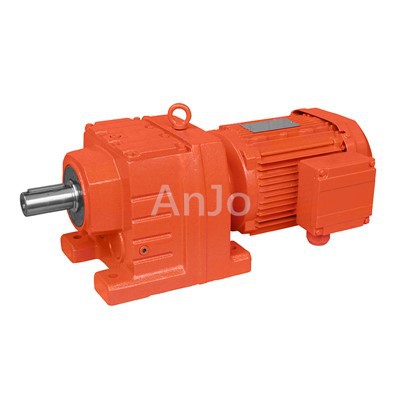
We offer a wide range of DC motor controllers suitable for different applications, from small – scale home appliances to large – scale industrial machinery. Our team of experienced engineers can provide customized solutions to meet your specific requirements. Whether you need a controller with a particular type of overload protection or a specific current rating, we can work with you to develop the right product.
BLDC Flat Gear Motor If you are in the market for high – quality DC motor controllers with reliable overload protection, we encourage you to reach out to us. Our sales representatives are ready to discuss your needs in detail, provide product samples, and offer competitive quotes. By choosing our products, you are not only getting a reliable motor controller but also the peace of mind that comes with knowing that your DC motors are well – protected.
References
- Fitzgerald, A. E., Kingsley, C., & Umans, S. D. (2003). Electric Machinery. McGraw – Hill Education.
- Chapman, S. J. (2012). Electric Machinery Fundamentals. McGraw – Hill Education.
- Kazmierkowski, M. P., Krishnan, R., & Blaabjerg, F. (2002). Control in Power Electronics: Selected Problems. Academic Press.
Hangzhou ANG Drive Co., Ltd.
We’re well-known as one of the leading dc motor controller manufacturers and suppliers in China, also support custom service. Please feel free to wholesale high quality dc motor controller made in China here from our factory. Contact us for more details.
Address: No.185, Jincheng Rd., Hangzhou 311202, China
E-mail: export6@angdrive.com
WebSite: https://www.angdrive.com/
