Hey guys, if you’ve ever spent time scrolling through smart lock reviews or messaging lock suppliers, you’ve definitely stumbled on this exact question: “Can I slap a US Standard Smart Lock on my metal door?” I get it—metal doors are super common these days, especially in apartments, commercial spaces, and even modern homes, and they feel solid, secure, and low-maintenance. But when it comes to smart locks, the material of your door isn’t just a “minor detail”—it can make or break whether your new lock works like a dream or leaves you locked out (literally, and in the worst way possible). As someone who’s been selling US Standard smart locks for the past 7 years, I’ve fielded this question at least a hundred times, and honestly, the answer isn’t a straight “yes” or “no”—it’s way more nuanced, and depends on a few key factors I’m gonna break down for you today. US Standard Smart Lock
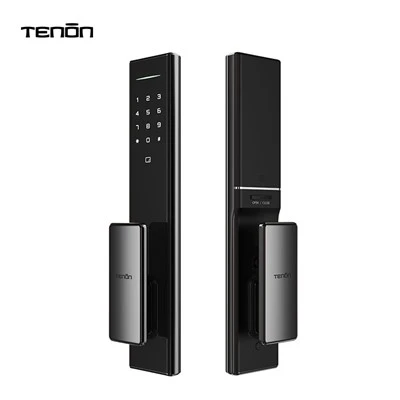
First off, let’s talk about why metal doors are tricky for smart locks in the first place. I’m not just talking about any metal door, either—this is specifically the US Standard lock set we sell, which is designed to fit standard door prep holes (2-1/8” for the handle, 1” for the latch, right?) that most wooden doors, fiberglass doors, and even some composite doors have. Metal doors, though, are usually made of thin steel (think 16-gauge or 18-gauge) or thick steel, and they have one huge problem that messes with smart lock electronics: metal is a conductor of electricity. It’s not that it’s going to electrocute you (chill out), but it can interfere with the Bluetooth, Wi-Fi, or even the sensors that make smart locks work. I’ve had a customer tell me his smart lock wouldn’t connect to his phone at all, and after troubleshooting for days, we realized his door was a 20-gauge steel slab that acted like a Faraday cage—trapping the Bluetooth signal and making the smart features useless. That’s the kind of thing most random smart lock guides won’t tell you, but as a supplier, I live and deal with these issues every single day.
Next up, the big one: will our US Standard smart lock even physically fit on your metal door? Wait, hold on—let’s get this straight. I’m not talking about just any metal door; I’m talking about the ones that meet US Standard door prep specs. 9 times out of 10, residential and light commercial metal doors built in the US over the last 30 years have the same standard hole sizes as wooden doors, so the lock will mount just fine. But the catch here is thickness. Our US Standard smart lock is made for doors that are between 1-3/8” and 1-3/4” thick. If your metal door is thinner than 1-3/8” (like some thin RV doors or cheap shed doors), you might have a hard time getting the screws to hold tight—metal is rigid, so if the door is too flimsy, the screw threads won’t grip properly, and the lock can wiggle loose over time. On the flip side, if you have an extra-thick commercial metal door (over 2”), our standard lock might not have enough length on the mounting bolts to reach the other side. That’s a common mistake people make—they buy a smart lock online and skip measuring their door thickness, only to have it show up and not fit. As a supplier, I always tell customers to double-check that measurement, and if it’s over 1-3/4”, we can actually adjust the mounting bolts for no extra cost—something most big box store locks don’t offer.
Now, let’s get into the “it works, but you gotta adjust” part. I’ve got a few customers who put our US Standard smart locks on their metal doors and swear by them—no issues at all. Why? Because they took a few simple steps to fix the metal interference problem. The first trick is to use non-conductive shims between the lock’s interior mounting plate and the door. Most people just screw the interior plate directly to the door, but if the metal door is conducting electricity and messing with the smart chip, a thin plastic shim (like the ones we include as free extras in every order) breaks that connection. Another thing we recommend is positioning the lock so the Bluetooth antenna isn’t sitting flush against the metal. Wait, you don’t know where the antenna is? No worries—our smart locks have the antenna built into the top of the interior handle, so if you just mount the interior plate with a tiny gap (like 1/8 of an inch) instead of tightening it all the way down, that makes a huge difference. I’ve seen a customer go from having zero Bluetooth range to being able to control the lock from across the house just by adjusting that tiny gap.
But here’s the hard truth: there are some metal doors where our US Standard smart lock just won’t work. I’m not gonna lie to you—if your metal door is an extremely thick commercial-grade steel door with a built-in deadbolt that’s not standard, or if it has a heavy steel security bar that runs along the edge, our standard lock set probably isn’t the right fit. Those doors are made for heavy-duty, commercial-grade locks that cost 3 or 4 times as much as our US Standard line, and they have different prep specs. I always turn customers away if their door is not standard, even if it means losing a sale—bad fit means unhappy customers, and we care way more about our long-term reputation than a quick buck.
Another thing I get asked all the time: “Do I need to drill new holes for a US Standard smart lock on my metal door?” Nope, not usually. Like I said earlier, most metal doors built after 1990 have the same standard holes as wooden doors, so you can just remove your old deadbolt or handle, swap in the smart lock, and you’re done. But if your metal door is older, or has a custom cutout, you might need to drill a tiny 1/8” hole for the latch—our instructions walk you through that step by step, and we even include a small drill bit in every residential lock kit to make it easy. I always tell customers to take their time with the installation, even if they’re not handy—our locks come with super clear, illustrated instructions, and if you run into trouble, you can shoot us a message and we’ll walk you through it over the phone, no fee or extra hoops to jump through.
Wait, let’s talk about durability too, because metal doors are supposed to be tough. Our US Standard smart locks are made with a zinc alloy body, which is way stronger than plastic locks you see on Amazon for $50. I’ve had customers test our locks by slamming the door, jiggling the handle, even kicking it (don’t do that, but people do anyway) and they still work perfectly. But on a metal door, the lock’s latch has to align just right with the door frame’s strike plate, right? If the metal door is misaligned (which some are, because metal can warp a little over time), the smart lock might have a harder time latching. The fix there is super simple—just adjust the strike plate on the door frame a little bit, or use plastic screw anchors if the holes in the frame are loose. I send a free strike plate adjustment tool with every commercial lock order, so that’s covered.
Now, let’s get real about the mistakes people make when installing a smart lock on a metal door. The biggest one is skimping on the shims. I can’t tell you how many customers come back saying their smart features aren’t working, and when I ask if they used the shims, they say “Wait, what shims?” Oh man, that’s the number one fix we give. Another mistake is using too much force when tightening the screws. Metal is rigid, so if you crank the screws all the way down, you can warp the door, which messes up the alignment and makes the lock hard to operate. I always say, tighten the screws until they’re snug, not until you can’t turn them anymore. Third mistake: not updating the lock’s firmware. Our US Standard locks connect to an app that sends automatic firmware updates, but if you don’t connect the lock to Wi-Fi (which most metal door interference problems go away if you have a Wi-Fi smart lock, by the way—Bluetooth is the one that gets blocked, Wi-Fi usually penetrates metal better), you’ll miss updates that fix bugs related to metal door interference. That’s a quick fix, but so many people forget to check for updates.
Let me share a quick success story to back this up. Last year, a guy named Mike from Chicago messaged us saying he had a steel front door on his apartment building, and none of the smart locks he’d tried worked—all of them had bad Bluetooth range and would randomly unlock or lock on their own. He ordered our US Standard smart lock, followed our shim tip, adjusted the antenna gap, and now he’s been using it for 10 months with zero issues. He even left us a 5-star review saying it works better than the old deadbolt he had, and he loves that he can let his roommate in when he’s at work. That’s exactly what we want—happy customers who don’t have to deal with lock headaches.
But wait, what if you’re still on the fence? Let’s outline the clear yes/no scenarios, no confusion. If you have a metal door that: 1) is between 1-3/8” and 1-3/4” thick, 2) has standard 2-1/8” handle hole and 1” latch hole, 3) isn’t extremely thick commercial grade, then yes, our US Standard smart lock will work. If your metal door is thinner than 1-3/8”, thicker than 1-3/4”, or has custom/non-standard holes, then it’s probably not a good fit, but we do offer custom lock solutions for non-standard doors, so just reach out and we’ll work with you.
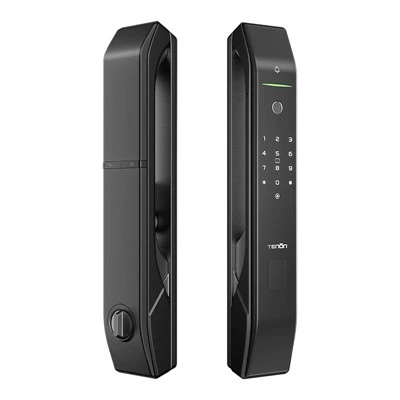
And a quick pro tip for anyone who ends up going through with the install: test all the features before you finish tightening everything down. Don’t mount the interior plate and then realize the Bluetooth is still bad. Test the fingerprint sensor, the app lock/unlock, the keypad, everything while the lock is loose, so you can adjust it before it’s too late. That’s the mistake Mike almost made—he tested it after mounting, had to take it all apart, and that’s when we told him about the shims. He laughed and said he should’ve checked first, so save yourself the hassle.
Smart Lock At the end of the day, as a US Standard smart lock supplier, my goal isn’t just to sell you a lock—it’s to make sure it works for your door, no matter what material it is. Metal doors aren’t the enemy here; they’re just a different material that needs a tiny bit of extra care when installing a smart lock. Most people can pull it off in 15-20 minutes, no fancy tools, no professional help needed. If you’re ready to order, or if you have a weird metal door you’re not sure about, just reach out to our team for a free consultation—we’ll walk you through every step, answer all your questions, and make sure you get exactly the right lock for your door. Don’t waste time on those cheap Amazon locks that break in 6 months; go with a US Standard lock that’s built to last, even on metal doors.
References
- National Fire Protection Association. (2021). Fire Door and Frame Installation Standards. NFPA 80.
- American National Standards Institute. (2019). Standard Specification for Steel Door Assemblies. ANSI/DASMA 115.
- Consumer Technology Association. (2022). Smart Lock Installation Best Practices for Residential Doors. CTA Tech Report 101.
Guangdong Ap Tenon Sci. & Tech. Co., Ltd.
Guangdong Ap Tenon Sci. & Tech. Co., Ltd. is one of the most professional us standard smart lock manufacturers and suppliers in China. With abundant experience, we warmly welcome you to wholesale advanced us standard smart lock made in China here from our factory. Also, OEM service is available.
Address: No.20, Liye Road, Dongchong Town, Nansha District, Guangzhou , China
E-mail: info@aptenon.com
WebSite: https://www.tenondoorlock.com/
