If you’ve ever driven down a winding backroad or navigated a potholed urban street, you’ve relied on your car’s suspension to keep it stable, controlled, and safe. And at the heart of that system, you’ll find the sway bar link—small, lightweight, easy to overlook, and absolutely critical. As a supplier of sway bar links, I see firsthand how often these parts take the brunt of rough roads, salt, and wear, and how many drivers don’t recognize the signs of a broken link until it’s too late. Ignoring a faulty sway bar link can turn a routine drive into a risky one, and even lead to damage to larger suspension components like the sway bar itself. So let’s break down exactly how to tell if your sway bar link is broken, what causes it to fail, and why addressing it quickly matters—plus, how to reach out if you’re looking for reliable, durable replacement parts for your vehicle or business. Sway Bar Link

First, let’s get clear on what a sway bar link does, because understanding its job makes it easier to spot problems. The sway bar (also called an anti-sway bar) is a curved metal bar that runs under your vehicle, connecting the left and right sides of the suspension. Its job is to reduce body roll—that lurching, side-to-side tilt you feel when turning sharply or swerving to avoid a hazard. Without a sway bar, your car would lean so much in turns that it could tip, or the inner wheels might lift off the ground, drastically reducing traction. The sway bar link is the small metal rod that connects the ends of the sway bar to the control arms on each side of the vehicle. It acts like a hinge, letting the sway bar flex up and down with the wheels while transferring the bar’s stabilization force to the rest of the suspension. Think of it as the bridge between your sway bar and the parts that actually move your wheels—break that bridge, and the whole stability system falls out of alignment.
Now, the most common signs of a broken sway bar link, starting with the ones you’ll feel when driving. Let’s start with the obvious one: clunking or knocking noises when going over bumps. If you’re driving over potholes, speed bumps, or uneven pavement, and you hear a sharp, repetitive clunk, especially from the front or rear of your car, that’s often a sway bar link issue. Here’s why: the link has rubber bushings at both ends that attach to the sway bar and control arm. Over time, those rubber bushings wear out, crack, or tear, and the metal link itself can bend or break. When that happens, the two parts the link is supposed to connect can rattle and bang together every time the suspension moves. I’ve had customers tell me they thought their exhaust was loose, or their brake calipers were rattling, until we explained that worn sway bar links are one of the top causes of that clunky bump noise. It’s not a subtle sound—if it’s a broken link, it’s a loud, distinct thud that gets worse when you’re driving at slow speeds over rough ground.
Next, body roll and loose handling. This is a big one, especially if you drive on curvy roads or highway on-ramps. A working sway bar link keeps your car from leaning too much when you turn, so if your car feels like it’s tipping to one side more than usual during a turn, that’s a strong sign. Some drivers describe it as their car feeling “floaty” or less responsive when steering—like there’s a delay between turning the wheel and the car reacting. That’s exactly the sway bar doing less of its job, because a broken link can’t transfer the bar’s force to the wheels. I once had a customer who’d owned their SUV for five years and never noticed how much body roll it had until they replaced a broken sway bar link; they told me it was like driving a totally different vehicle, more stable and controllable. If you’re finding yourself leaning into turns to counteract the tilt, or if your car feels like it might tip when taking a sharp turn, don’t ignore that—this is a safety hazard, not just an annoyance.
Another sign that’s easy to spot, if you know what to look for: uneven tire wear. Wait, you might be thinking, tire wear sounds like an alignment issue. But a broken sway bar link puts uneven stress on the suspension, especially the tires. If one side of your tire is wearing faster than the other, or if you see excessive cupping (those small, scalloped dents on the tire tread), that could be from a worn or broken sway bar link. When the link is faulty, the left and right suspension don’t move in sync, so one tire might be pressing harder on the road than the other during turns or bumps, leading to uneven tread wear. I always tell drivers to check their tire wear if they’re dealing with a clunk or loose handling, because it’s a visible, easy-to-assess sign that something’s off with the suspension.
Now, what if the link is partially broken, not fully snapped? You might notice a pulling or drifting when driving straight, especially at higher speeds. That’s because a faulty link can cause the sway bar to work unevenly on one side, so your car will tend to pull gently to the left or right, even if your alignment is correct. Some drivers confuse this with worn brake pads or tire pressure issues, but if you’ve checked those, it’s worth inspecting the sway bar links. Another subtle sign: when you’re parking or making tight turns, you might feel a slight vibration in the steering wheel, more than usual. That vibration is from the loose link moving back and forth, transferring that movement up to the steering column.
So, what causes a sway bar link to break in the first place? Understanding the causes can help you prevent it, or pick the right replacement part. The number one culprit is rough road conditions. Potholes, speed bumps, uneven pavement, and off-roading put constant stress on the link. Every time your wheel hits a bump, the suspension moves, and the sway bar link absorbs that force. Over thousands of miles, that repeated stress can bend the metal link or tear the rubber bushings at the ends. Another big cause is road salt and corrosion, especially in regions that use salt to melt ice and snow in winter. Salt eats away at the metal, weakening the link over time—what starts as a small rust spot can turn into a crack, leading to a break. Even normal wear and tear from daily driving: the rubber bushings dry out, crack, and lose their flexibility after 50,000 to 100,000 miles, which can make the link loose and eventually fail.
Now, how do you confirm a broken sway bar link, beyond just the driving signs? You can do a simple visual and physical check in your driveway, no special tools needed. First, park your car on a flat surface, turn off the engine, and set the parking brake. If it’s a front sway bar link, look under the front of the car, between the front wheels. You’ll see the curved sway bar running along the bottom, and small rods connecting the ends of the sway bar to the lower control arms on each side. For rear links, they’ll be under the back of the car, connecting the sway bar to the rear suspension components.
First, inspect the link for visible damage. Look at the metal rod: is it bent, cracked, or broken in half? Are the rubber bushings at each end torn, cracked, or coming loose from the metal? If you see any of that, that’s a clear sign of a faulty link. Next, test the link’s tightness. Grab the link with both hands, pull and push it back and forth, and twist it. If it moves more than a tiny bit—like, if you can wiggle it an inch or more—that means the bushings are worn out, or the link is loose. A working sway bar link should be firm, with almost no movement. If it wiggles, even a little, that’s a problem. I always recommend having someone help you with this test: have them push down hard on the front of the car (or back, for rear links) while you watch the sway bar links. If the link moves when the car bounces, that confirms it’s not doing its job.
Wait, a quick note: sometimes, a broken sway bar link can be confused with other suspension parts, like worn control arm bushings or a bad sway bar itself. That’s why it’s good to check the links first—they’re the easiest, cheapest part to replace, so it’s smart to rule them out before tackling more expensive repairs. If you check the links and they look and feel tight, then you can move on to inspecting other parts, but 9 times out of 10, the clunking and loose handling points back to the sway bar link.
Now, why is it so important to replace a broken sway bar link quickly? A lot of drivers put it off, thinking “it’s just a small part, I can drive a little longer.” But that’s a mistake. A broken sway bar link means the sway bar isn’t doing its job, which increases your risk of a rollover accident—especially at higher speeds or during sharp turns. It also puts extra stress on other suspension components: if one side of the suspension isn’t working with the other, that can lead to worn control arms, ball joints, or even damage to the sway bar itself. Replacing a sway bar link is a relatively cheap, quick repair, but if you wait, you might end up paying much more for bigger repairs down the line. As a supplier, I always tell my customers that replacing sway bar links in pairs is the best practice—if one is broken, the other is almost certainly worn and will fail soon too, so replacing both at once saves you time and money later.
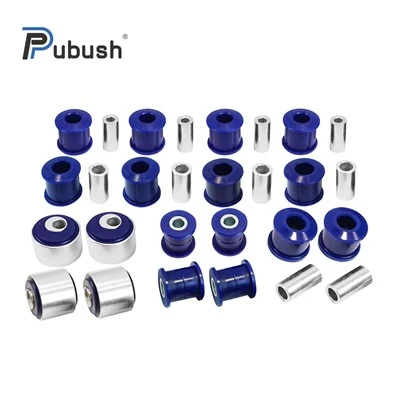
Now, if you’re a vehicle owner looking for replacement sway bar links, or a mechanic or shop owner needing reliable parts for your business, you need parts that are built to last. Cheap, generic sway bar links might seem like a good deal, but they often use low-quality rubber bushings that tear quickly, or thin metal that bends easily under stress. That’s why investing in durable, properly engineered sway bar links makes all the difference. Whether you’re looking for parts for a daily driver, a truck used for heavy work, or a fleet of vehicles, choosing parts that are designed to withstand rough roads, corrosion, and everyday wear will keep your customers safe and your vehicles on the road longer.
Sway Bar If you’ve noticed any of the signs we talked about—clunking noises, increased body roll, uneven tire wear, or loose steering—reach out to discuss your sway bar link needs. Whether you’re a DIY mechanic needing a single replacement part, or a business ordering parts in bulk, we can help you find the right sway bar links for your vehicle make and model, built to meet the standards for performance and durability. Don’t wait until a small issue turns into a big, dangerous repair—take action today to keep your suspension working the way it should.
References
- National Highway Traffic Safety Administration (NHTSA). "Suspension System Safety: Common Faults and Crash Risks."
- Automotive Suspension Technology Association (ASTA). "Component Wear Patterns in Passenger Vehicle Sway Bars and Links."
- International Journal of Automotive Engineering. "Durability Analysis of Sway Bar Links Under Real-World Driving Conditions."
- AAA Automotive Research Center. "Driver Perception of Suspension Faults: Noise, Handling, and Tire Wear Indicators."
- Society of Automotive Engineers (SAE International). "Design Standards for Anti-Sway Bar Link Bushings and Components."
Xingtai Refined Machinery and Auto Accessory Co., Ltd.
Xingtai Refined Machinery and Auto Accessory Co., Ltd. is one of the most professional sway bar link manufacturers and suppliers in China, featured by quality products and low price. Please rest assured to wholesale durable sway bar link made in China here from our factory. Customized orders are welcome.
Address: XINGTAI REFINED MACHINERY AND AUTO ACCESSORY CO., LTD507 NORTH TAIHANG ROAD, XINGTAI CITY, HEBEI PROVINCE, PR.
E-mail: lindy@rfauto.biz
WebSite: https://www.pubush-suspension.com/
